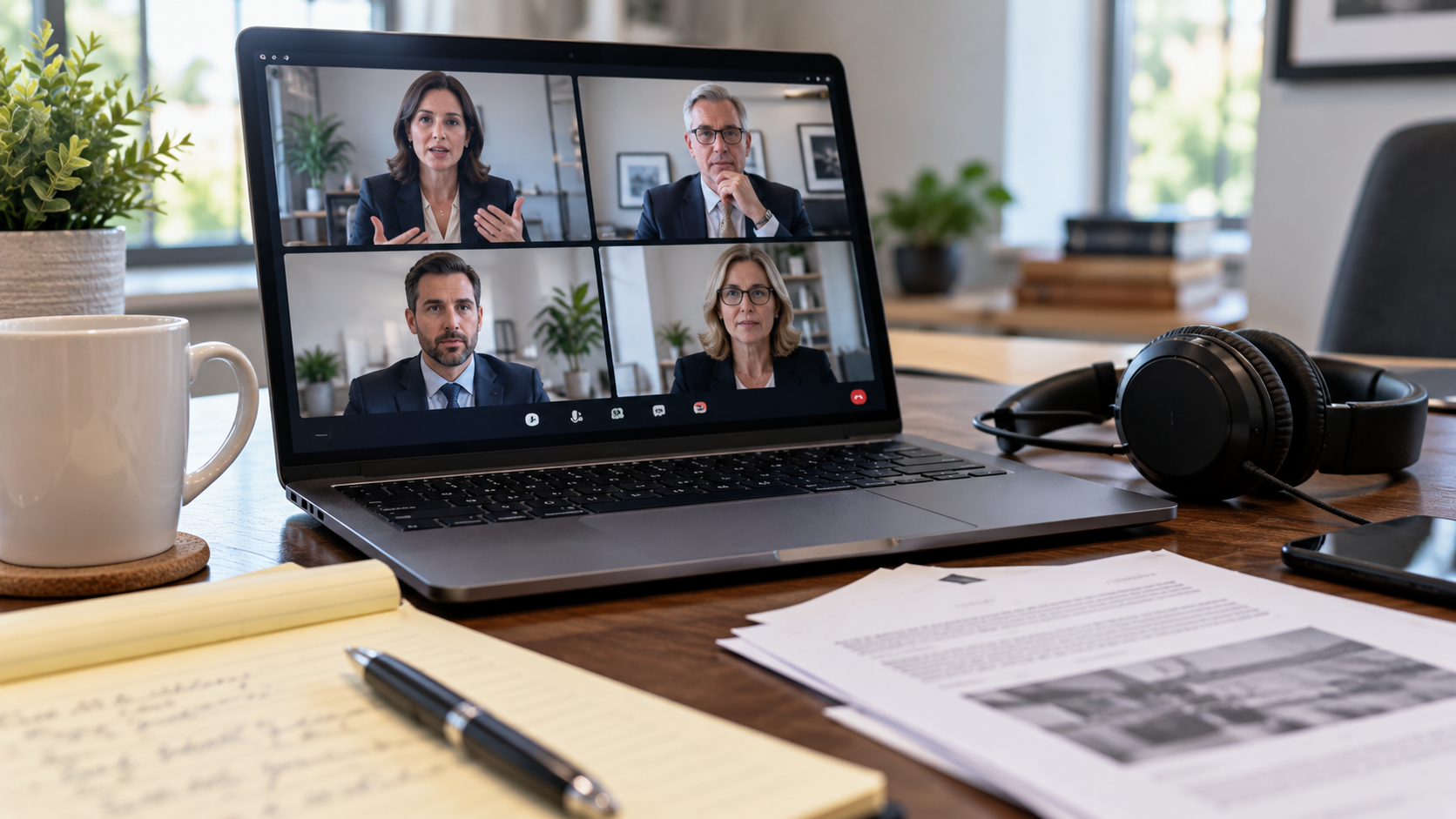
Remote depositions have changed where testimony can take place without changing the basic purpose of the proceeding. Instead of gathering the witness, attorneys, court reporter, and other participants around the same conference table, each person may join from a separate office, home, or other location. Questions are still asked, testimony is still given, objections can still be made, and a record still needs to be created.
What does change is the environment surrounding that process. Audio quality becomes more important, exhibits have to reach participants electronically, speakers need to identify themselves clearly, and a connection problem can interrupt an exchange that might have continued without difficulty in person. A successful remote deposition therefore depends on more than simply opening a video meeting. The technology and the participants have to work together in a way that allows the testimony to proceed clearly.
Preparing the Technology Before Testimony Begins
A remote deposition works best when technical issues are addressed before everyone goes on the record. Cameras, microphones, speakers, internet connections, and the meeting platform should be functioning properly before questioning starts. A participant discovering at the scheduled start time that a microphone is not recognized or a browser cannot access the meeting can delay the entire proceeding.
The physical environment matters as well. A quiet room reduces competing noise, while a stable internet connection can help prevent portions of testimony from becoming distorted or interrupted. Headsets or external microphones may improve audio in some circumstances, but the particular equipment is less important than making certain everyone can hear and be heard clearly. Preparation is especially valuable for witnesses who may be unfamiliar with remote meeting technology or the platform being used.
Entering the Remote Proceeding
When participants enter a physical deposition room, identifying who is present is usually straightforward. Everyone can see who is sitting around the table. A remote proceeding can require more deliberate introductions because participants may enter the meeting at different times, use abbreviated display names, or join without their cameras initially enabled.
Once the proceeding begins, appearances and other introductory information can be placed on the record as appropriate. The witness can then be sworn according to the procedures applicable to the deposition. From that point, the familiar question and answer process begins.
The basic sequence resembles what we covered in what happens during a deposition, but the technology adds another layer to nearly every stage of the examination.
Audio Becomes Especially Important
A court reporter working in a conference room can hear voices directly. During a remote deposition, spoken testimony reaches the reporter through microphones, internet connections, and speakers or headphones. That makes audio quality one of the most important practical differences between remote and in person proceedings.
Background noise, weak microphones, unstable connections, and participants speaking simultaneously can all make testimony harder to capture. Even a small delay in the connection can cause two people who believe they are taking turns to begin speaking at the same time. Participants may need to be more deliberate about allowing a question to finish before answering and waiting for another speaker to complete a statement before responding.
If part of an answer cannot be heard clearly, the problem should be addressed while the proceeding is underway rather than assuming the missing language can be reconstructed later. Clear audio supports a clearer record.
The Witness Is No Longer Across the Table
Physical distance also changes the way participants interact with the witness. In an in person deposition, an attorney can place a document in front of the witness, observe when the witness has finished reviewing it, and move naturally between conversation and documents. Remote proceedings transfer much of that interaction to the screen.
The attorney can still observe the witness through video, but the field of view is narrower than sitting in the same room. Camera position, lighting, and connection quality affect what participants can see. Small gestures may be less obvious, and a witness looking away from the camera does not necessarily reveal what is happening outside the visible frame.
These differences do not prevent effective questioning, but they do make clear verbal communication particularly useful. Spoken responses are part of the record in a way that gestures and other visual reactions generally are not.
Exhibits Move From the Table to the Screen
Documents require one of the largest practical adjustments. In a conference room, an attorney can hand the witness a paper exhibit and ask everyone to turn to a particular page. During a remote deposition, that material usually has to be delivered electronically or displayed through the technology supporting the proceeding.
The participants need to know which document is being discussed and where within that document the attorney is directing the witness. If an exhibit contains many pages, clear references can prevent confusion about whether everyone is looking at the same section. Depending on the workflow being used, materials may be uploaded beforehand and revealed when needed or distributed during the deposition.
Our discussion of deposition exhibits looks more closely at the relationship between documents and testimony. In a remote environment, that relationship remains the same even though the exhibit has moved from paper on a table to a file on a screen.
Multiple Speakers Require Additional Attention
Overlapping speech is difficult in almost any reporting environment, but remote technology can make it particularly troublesome. Video platforms are designed for conversation, yet they do not always reproduce several simultaneous voices clearly. One microphone may dominate while another participant becomes difficult to hear.
Attorneys and witnesses can help by allowing each speaker to finish before responding. This can feel slightly less conversational at first, but it gives questions and answers clearer boundaries. It also reduces the possibility that an objection, response, or follow up question becomes obscured by another participant.
Speaker identification can require additional care when many people are connected. A reporter may recognize voices over the course of the proceeding, but participants identifying themselves when necessary can help keep exchanges understandable.
Handling Interruptions and Connection Problems
Technology occasionally fails. A participant may lose internet access, audio may disappear, video may freeze, or the entire meeting platform may experience an interruption. What matters is recognizing when the problem affects the proceeding.
If a witness cannot hear a question or the reporter cannot hear an answer, continuing as though nothing happened can create uncertainty. The proceeding can be paused while the problem is addressed and resumed when the necessary participants can communicate again.
Minor interruptions may require only a few moments. A more significant connection failure can require a participant to reconnect or change devices. Building enough time into the schedule and knowing how technical assistance will be handled can make these interruptions easier to manage.
Private Conversations Require a Different Approach
During an in person deposition, attorneys can step out of the conference room or speak privately with appropriate participants during a break. A remote environment requires a digital equivalent when private conversations are necessary.
Some platforms provide separate virtual rooms that allow selected participants to leave the main session temporarily. Other arrangements may rely on a separate communication method. Whatever process is used, participants need to understand when they are on the record and when the formal proceeding has paused.
This is another reason remote deposition technology should be understood as part of the working environment rather than merely a way to transmit video. The platform may need to support several activities that would ordinarily occur naturally within a physical office.
Realtime Can Travel With the Proceeding
Remote participation can also extend to realtime reporting. Authorized participants may receive translated testimony on their devices while the deposition is underway, even though they are not physically located with the court reporter.
This allows the written testimony and the video proceeding to exist alongside one another. An attorney can listen to the witness while also viewing the reporter’s realtime feed, providing another way to follow detailed testimony during a lengthy examination.
As with an in person proceeding, realtime text should be distinguished from the completed transcript. The immediate feed serves a different purpose from the final record prepared after the deposition.
Remote Does Not Mean Informal
Joining a deposition from an office or home can make the surroundings feel less formal than entering a law office conference room. The nature of the proceeding, however, has not disappeared simply because everyone is communicating through a screen.
The witness is giving testimony. Attorneys are conducting an examination. Objections and exhibits can become part of the proceeding, and the reporter is capturing the record. Participants therefore benefit from approaching the session with the same attention they would bring to an in person deposition.
That includes limiting distractions, remaining available while on the record, speaking clearly, and recognizing that ordinary video meeting habits may not always work well when every spoken exchange matters.
A Different Room for the Same Process
Remote technology separates the participants physically while bringing them together within one proceeding. The witness may be hundreds of miles from the questioning attorney, and the court reporter may be somewhere else entirely. Yet the testimony still develops through the familiar progression of questions, answers, objections, exhibits, and breaks.
The most successful remote depositions tend to make the technology less noticeable once questioning begins. Participants can hear one another, documents appear when needed, interruptions are limited, and the reporter can follow the proceeding without struggling against the connection.
The room has changed. The need for a clear and usable record has not.